
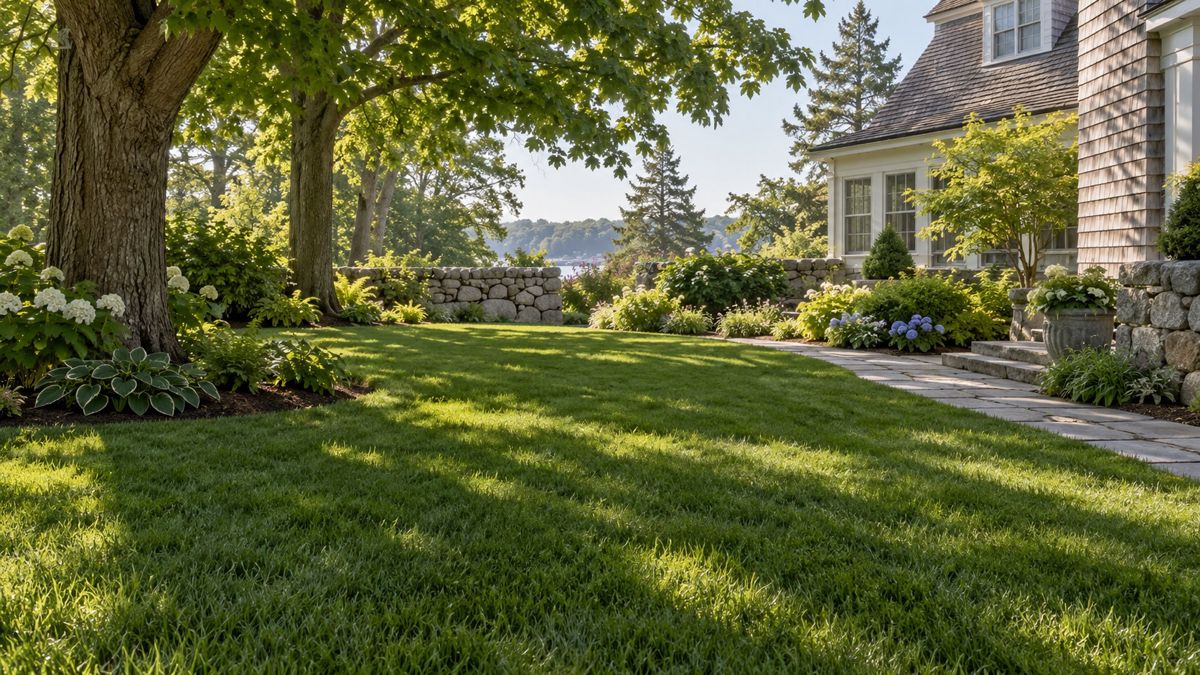
For most Portland lawns, the best choice is a cool-season blend: Kentucky bluegrass mixed with fine fescue and some perennial ryegrass. Fine fescue does the most for shady, dry or sandy spots, and bluegrass gives a dense, tough lawn in full sun. The right mix for your yard depends on light, soil and how close you are to the salt.
This guide explains why, what each grass does, and how to get new sod to take root.
Why does Portland's climate decide which grass you choose?
Portland sits on Casco Bay, with cold winters, a short growing season and a lot of wind and salt in the air. Warm-season grasses that are popular farther south do not survive the winters here, so the choice is among cool-season grasses. These grow strongly in spring and fall, slow down in the summer heat and go dormant in winter.
Soil matters just as much as weather. Around Portland it is often acidic, thin over granite ledge in places and heavy with glacial clay in others. Thin soil dries out fast in a July dry spell. Clay holds water in spring and then turns hard. A grass that does well in one yard on your street may struggle in the next.
Two more local points are worth knowing about:
- Road salt. Grass along the street and driveway often browns after winter because of de-icing salt.
- Grubs. European chafer grubs are a known lawn pest in southern Maine and can ruin a lawn whatever the grass type.
Which grass types suit lawns in Portland, Maine?
Four cool-season grasses cover most lawns in this area. Seed and sod farms usually sell them as blends, so you rarely buy a single type.
Kentucky bluegrass
This is the classic northern lawn grass. It forms a thick, even turf, handles cold well and spreads by underground stems, so it can repair small bare patches by itself. It needs full sun to do its best and a fair amount of water and feeding. In deep shade it thins out.
Fine fescues
Creeping red, hard and chewings fescues are the toughest choice for shade, dry soil and low-fuss lawns. They need less fertilizer and water than bluegrass and handle some salt. The blades are fine and soft. They do not like heavy foot traffic as much as bluegrass does.
Perennial ryegrass
Ryegrass germinates quickly and holds up to foot traffic, which is why it is often mixed into sod and seed blends. It is less winter hardy than bluegrass, so it is used as part of a mix, not on its own.
Tall fescue
Tall fescue is deep-rooted and copes with heat and drought. It is sometimes used in southern Maine, but it has a coarser look and is less reliable in the coldest spots. Ask a local supplier whether a tall fescue blend suits your site.
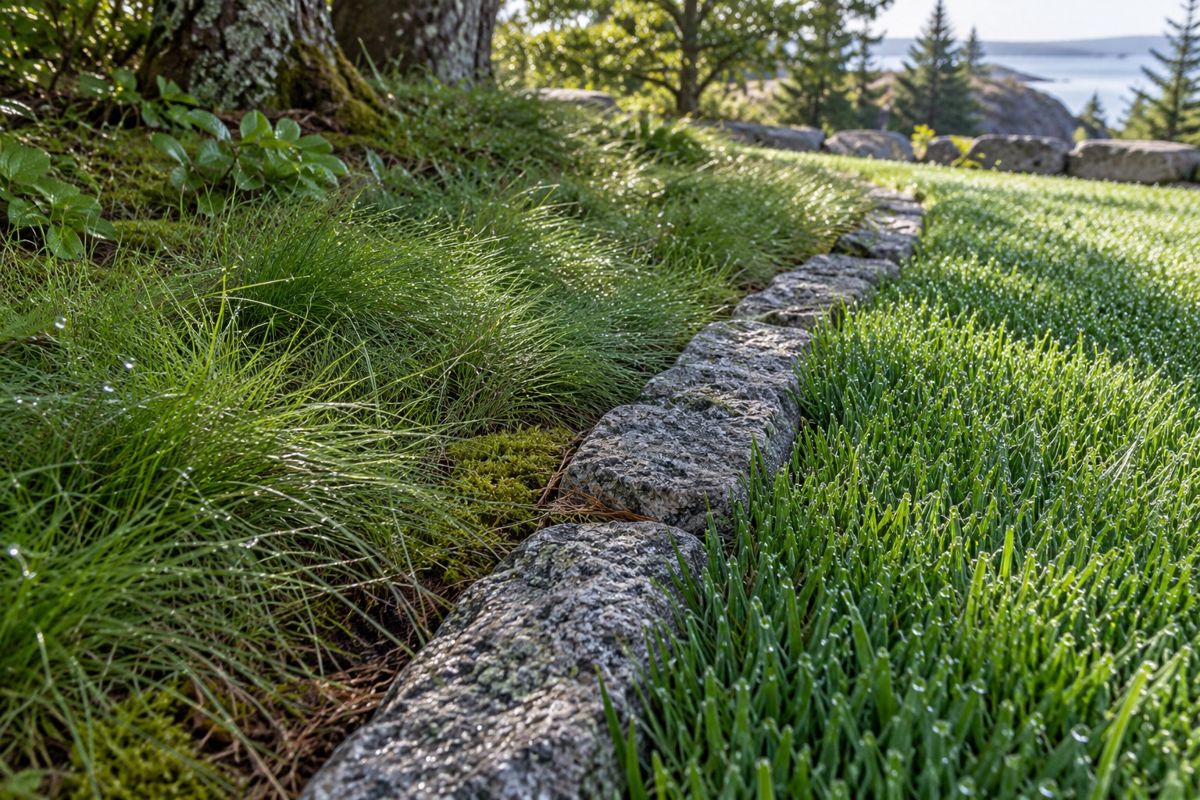
How do sun, shade and salt change the choice?
Look at your yard at different times of the day before you pick a grass. Light is the biggest factor.
- Full sun. Bluegrass-based blends with some ryegrass give the thickest lawn.
- Part shade. A blend with more fine fescue holds up better under trees and beside buildings.
- Deep shade. No grass thrives with very little light. Fine fescue can survive, but ground cover or mulched beds may suit the area better.
- Salt exposure. Near the shore or a salted road, fine fescue and perennial ryegrass tend to cope better than bluegrass alone. Flushing the soil with water in spring helps.
- Dogs and heavy play. Choose a blend with ryegrass and bluegrass and expect to repair patches.
It also pays to test the soil. The University of Maine Cooperative Extension offers soil testing, and the result tells you whether you need lime, which many acidic soils in Maine do, and what nutrients are low.
Is sod or seed the better way to start a lawn here?
Both work. Seed costs less and gives you a wider choice of blends, but it takes weeks to fill in, needs careful watering and is best sown in late summer or early fall. Heavy rain can wash seed off a slope.
Sod gives you a usable lawn right away. It holds the soil on slopes, blocks most weeds and can be laid in spring or fall without waiting for germination. The trade-off is cost and weight, and it only works if the soil under it has been prepared.
If your yard has a slope, a lot of weeds or a deadline, sod is usually the better choice. If you have a large area and time to spare, seed may be enough.
When should you lay sod in Portland?
Spring and early fall are the best times. The soil is cool and moist, so roots grow without heat stress. Spring can be muddy, and you need to wait until the ground has thawed and dried enough to work without making a mess. Early fall is often the sweet spot, because the soil is still warm and the air is cooler.
You can lay sod in midsummer, but it needs more water and more attention. Avoid laying it once the ground begins to freeze, because the roots will not have time to knit in. Sod availability can vary through the season, so book ahead.
How do you get new sod to root well?
Preparation does more than any other step. Before the sod arrives, remove old turf and weeds, loosen compacted soil, add compost or topsoil where it is thin, and grade the area so water drains away from the house. Rake it smooth and take out the stones.
After it is laid, follow these steps:
- Water right away until the soil underneath is soaked.
- Keep it moist for the first couple of weeks, which can mean watering every day, especially in warm weather.
- Keep foot traffic and pets off it while the roots form.
- Check by gently lifting a corner. When it resists, it has rooted.
- Mow once it is firmly rooted, and keep the grass fairly tall, around three inches, to shade the soil and encourage deeper roots.
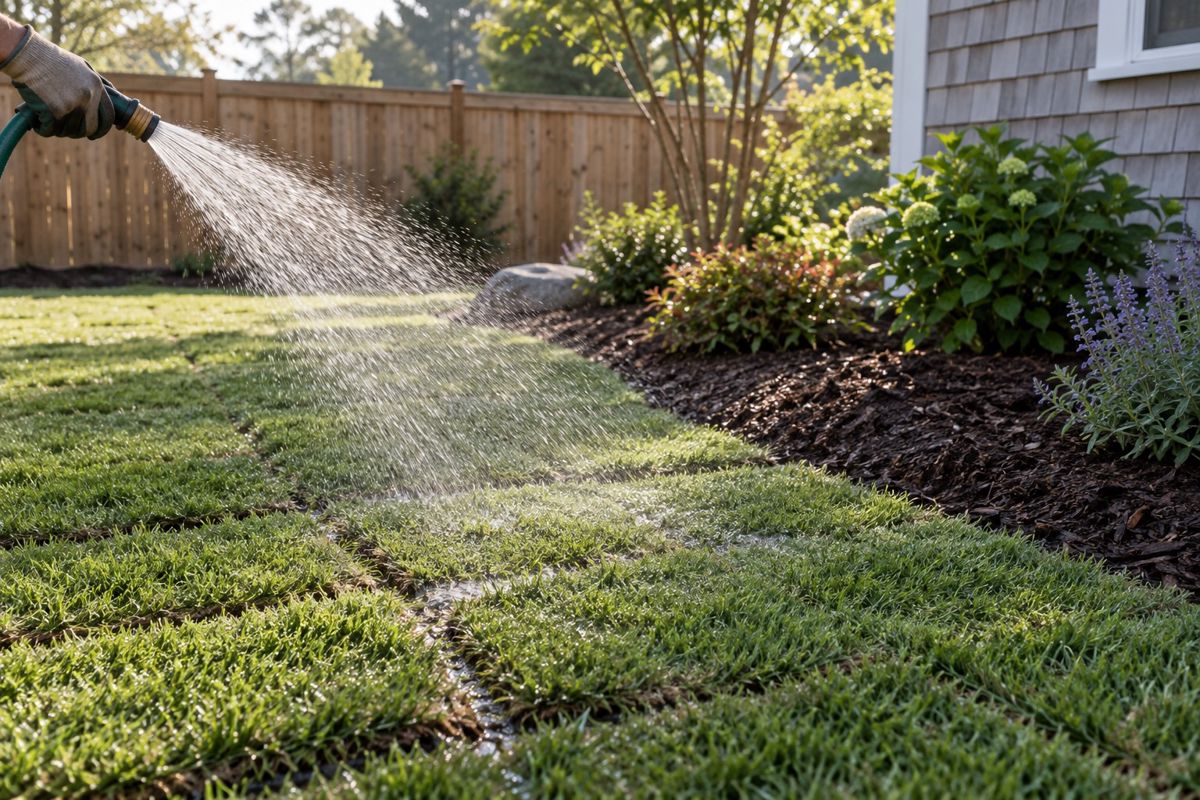
If you do not want to water by hand, an automatic system can help. See our sprinkler and irrigation page for how that works.
Which service fits your lawn?
If your lawn is worn out, full of weeds or damaged by grubs, replacing it with new sod is often faster than trying to repair it. Our sod installation service covers removing the old lawn, preparing the soil, grading and laying fresh sod. We quote each job in writing after seeing the site, so you know what is included.
If your yard has drainage trouble or a slope, deal with that first, since a new lawn will not last on a wet site. Send a few details and we will arrange a visit and a written quote.