
Skip to content
  • Free written quotes
  • Local crews
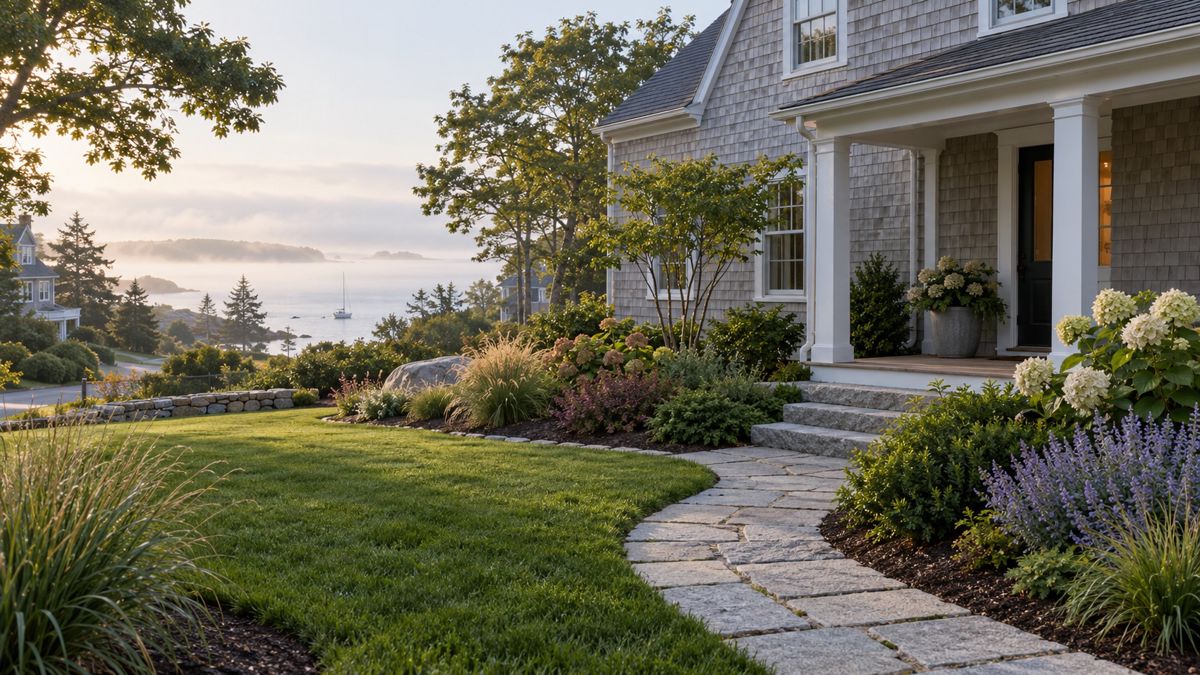
Freshly landscaped front yard of a shingled house in coastal Maine

Inland lots, hills and open land

Landscaping in Gorham, ME for inland lots and rural properties

Landscape design, patios, lawns, walls and irrigation for Gorham homes on larger inland lots, where wells and septic systems are common. Request a quote today.

  • Written quote before any work starts
  • Design, stonework, lawns and irrigation
  • Built for salt air, frost and ledge
  • Free written quotes
  • Local crews
  • Reliable scheduling
  • Tidy job sites

Inland yards in Gorham

Gorham lies west of Portland, away from the coast, with a village center, a university campus, farmland, woods and growing subdivisions. Salt spray is rarely the issue here. Instead, owners deal with large lots, rolling ground, cold pockets and long driveways.

Soils vary from sandy plains to stony till and wetter low ground. Many homes sit on a rural-style lot of generous size, so landscaping is often about giving structure to a lot of space. Patios, borders, windbreaks and gentle slopes of lawn all play a part, and so does keeping everything manageable to mow and maintain.

Route 25, Route 114 and rural driveways

Traffic follows Route 25, Route 114 and the roads that connect the village to neighboring towns. Many homes sit on rural roads with long gravel driveways, culverts and drainage ditches along the edge.

Those ditches and culverts matter for landscaping. Water from the road or from uphill fields can cross a yard, and regrading near a culvert changes where it goes. Gravel driveways can be soft after thaw. When you ask for a quote, tell us about any culverts, ditches and low spots so we plan around them.

These conditions favor a plan that fits the land instead of fighting it.

Services for Gorham properties

Here is how our five services apply to larger inland lots.

Spring thaw is the time to check how a driveway holds a loaded truck.

Rural lots give you room, but room has a price. The main drivers are easy to list.

  • Hauling. Stone, loam and base material travel farther to a distant lot.
  • Terrain. Slopes call for walls, terraces or careful regrading.
  • Stone in the ground. Glacial till can hide boulders that slow digging.
  • Frost. Cold air settles in low spots, which affects what you plant there.

A written quote lists these factors, so you see why each item is there.

Ask us to separate the items so you can phase the project over more than one season.

Wells, septic systems and local approvals

Most homes outside the village use private wells and septic systems. Heavy vehicles can damage tanks and leach fields, and digging near them is risky. Tell us where yours sit and share any records you have, so we keep clear.

Check with the town about rules for walls, paved area and work near streams or wetlands. Call 811 before digging. If a project is large, such as a terraced slope, ask whether an engineer is needed. We tell you early when a plan looks like it needs one.

Do not worry about getting every detail perfect, because a site visit fills in gaps.

How a Gorham quote request works

Call (207) 555-0129 or use the form. We serve Gorham and confirm availability after your request, since distance can affect scheduling.

  1. Give your road, the size of the lot and the type of driveway.
  2. Tell us where the well, septic tank, culverts and ditches are.
  3. Send photos of the whole yard, the slopes and any wet areas.
  4. We visit to look at soil, slope and access for trucks.
  5. A written quote follows, with the scope, materials and any phases.

We also note culverts and field edges that could affect the schedule.

Get a quote in Gorham

Tell us what you need and we call you back.

No obligation.

Step 1 of 3

What do you need?

Questions about Gorham

Why is my Gorham lawn so patchy and stony?

Stony till and thin topsoil are common in the area. Grass struggles when roots meet stone or compacted layers close to the surface. Removing stones, adding loam and grading before sod or seed usually improves results. We check how deep the good soil goes. Frost heave can also lift stones to the surface each spring.

How do I deal with water crossing my yard from a hill?

Common solutions include swales, dry creek beds, drain pipe and walls that slow runoff. The right one depends on how much water arrives and where it can go safely. Culverts and neighboring land matter too. We look at the slope and follow the water path before suggesting anything. Neighbors uphill may share part of the water, which the plan should respect.

Do I need windbreaks on an open Gorham lot?

They can help. Open fields let wind sweep across the yard, drying plants and making patios uncomfortable. A row of evergreens or a mixed hedge reduces wind and adds privacy over time. We choose varieties that suit the soil and leave space for them to grow. Spacing matters, so mature trees do not shade the driveway or the house.

Can landscaping be done in stages on a large lot?

Yes, and it is common. Drainage and grading usually come first, followed by hardscape, then lawn and planting. Staging spreads the cost and lets you see how you use the space. We write a phased plan so each stage fits the final design. Many owners begin with the area closest to the house and work outward.

What should I know before irrigating from a private well?

Well output limits how many zones can run at once, and irrigation should not leave the house without water. Zones can be scheduled early in the morning or split over time. A well specialist can test flow if you are unsure. We design the system around your supply. Rain sensors help avoid watering during wet spells.